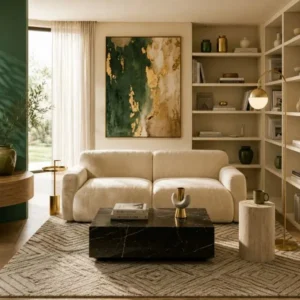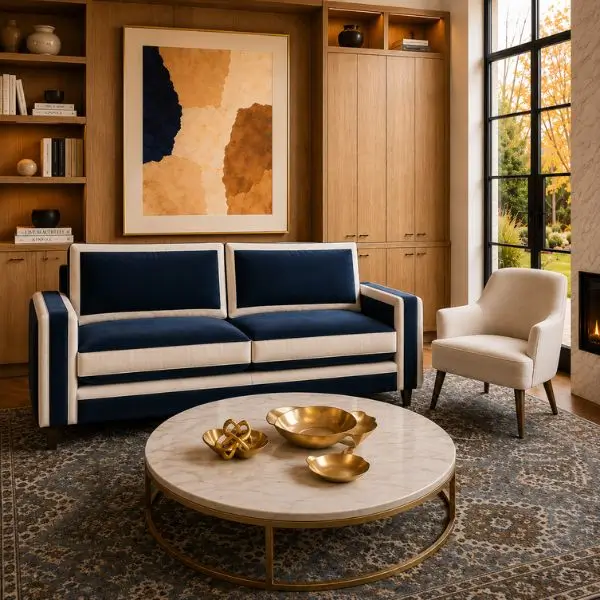
Small living room ideas are becoming increasingly popular as more homeowners look for ways to create beautiful spaces without expanding their square footage. While many decorating guides focus on colors, lighting, and accessories, truly luxurious living rooms often rely on something more important: thoughtful design decisions.
A small living room can feel elegant, inviting, and sophisticated when every element has a clear purpose. The most successful interiors are not necessarily filled with expensive furniture. Instead, they are carefully composed to create balance, comfort, and visual impact.
Professional designers understand that luxury is often created through layout, proportion, and styling. The way furniture is arranged, the scale of decorative pieces, and the balance between furnishings can completely transform how a room feels.
The following small living room ideas explore practical design techniques that help compact spaces feel refined, timeless, and effortlessly luxurious.
Create a Better Furniture Layout
One of the most effective small living room ideas is improving the furniture layout. Even beautiful furniture can look awkward when the arrangement feels crowded or disconnected.
A well-planned layout creates flow throughout the room and allows each piece to contribute to the overall design. Instead of pushing every item against the walls, consider creating a more intentional conversation area where furniture feels connected.
Focus on Flow and Circulation
Luxury interiors always feel comfortable to move through. Leave enough space between furniture pieces so the room feels open and welcoming rather than cramped.
Clear pathways instantly make a small living room feel more organized and visually appealing.
Arrange Furniture Around a Purpose
Every living room should have a central purpose. Whether the room is designed for conversation, relaxation, or entertainment, the furniture layout should support that goal.
When furniture is arranged with intention, small living room ideas feel more sophisticated and professionally designed.
Use Oversized Pieces Instead of Multiple Small Ones
Many people assume that small living room ideas require small furniture and tiny decorative accessories. In reality, designers often do the opposite.
A room filled with too many small objects can quickly feel cluttered and visually busy. Larger pieces create a stronger visual impact while making the space feel more intentional and sophisticated.
One of the most effective small living room ideas is choosing fewer pieces with greater presence rather than filling the room with multiple decorative elements competing for attention.
Choose Art That Makes a Statement
A common mistake in small living rooms is selecting artwork that is too small for the wall.
Large-scale artwork immediately draws attention and creates a sense of confidence within the space. A single oversized piece often feels more luxurious than a collection of small frames scattered across the wall.
This approach creates a stronger visual impact by directing attention toward a single focal point.
Let Key Furniture Pieces Stand Out
Instead of adding several accent chairs, side tables, or decorative accessories, consider investing in one standout piece.
A sculptural coffee table, a beautifully upholstered chair, or a statement console can become a defining feature of the room.
Many designer-inspired small living room ideas rely on this principle because it creates visual clarity while maintaining an elegant and curated appearance.
Style Surfaces Like an Interior Designer
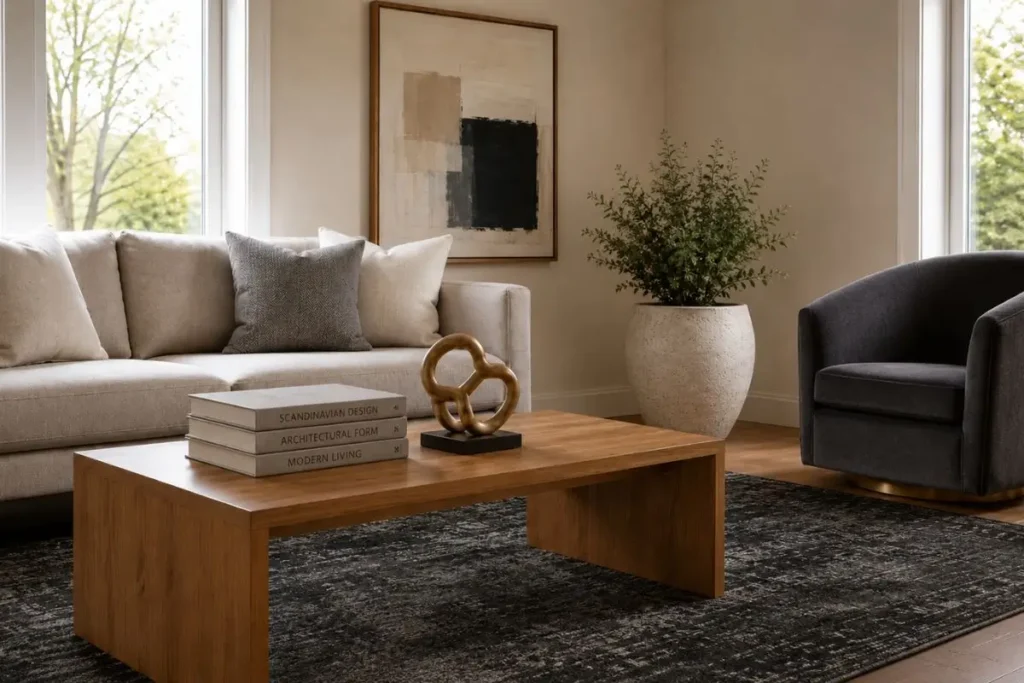
One of the details that separates ordinary rooms from professionally designed interiors is styling. Designers pay close attention to how surfaces are arranged because these small details influence the overall atmosphere of a room.
Many small living room ideas focus on furniture selection, but styling is often what makes a space feel polished and complete. A thoughtfully arranged coffee table, console, or shelf can instantly elevate the entire room.
The goal is not to add more decorations. Instead, it is about creating compositions that feel balanced, intentional, and visually appealing.
Create Groups Instead of Scattering Objects
A common decorating mistake is placing small accessories randomly throughout the room.
Designers often group decorative pieces together to create a more intentional and cohesive arrangement. A stack of books, a ceramic vessel, and a small decorative object can form a composition that feels intentional and refined.
Grouping objects also helps reduce visual clutter, which is especially important in compact living rooms.
Combine Different Heights and Textures
The most interesting arrangements combine objects with different shapes, heights, and materials.
For example, a stone tray, a ceramic vase, and a linen-covered book create visual contrast while maintaining harmony. This simple technique adds depth and character without overwhelming the room.
Thoughtfully styled surfaces help a living room feel polished, refined, and professionally designed.
Create Visual Rhythm Through Repetition
One of the most overlooked small living room ideas is the use of repetition. Interior designers often repeat colors, materials, and shapes throughout a room to create a sense of harmony and flow.
When certain elements appear more than once, the eye naturally moves through the space with ease. This creates a polished look that feels intentional rather than accidental.
Visual rhythm is created by repeating a few carefully chosen elements throughout the room. These subtle connections help the space feel balanced and cohesive.
Repeat Colors in Different Areas
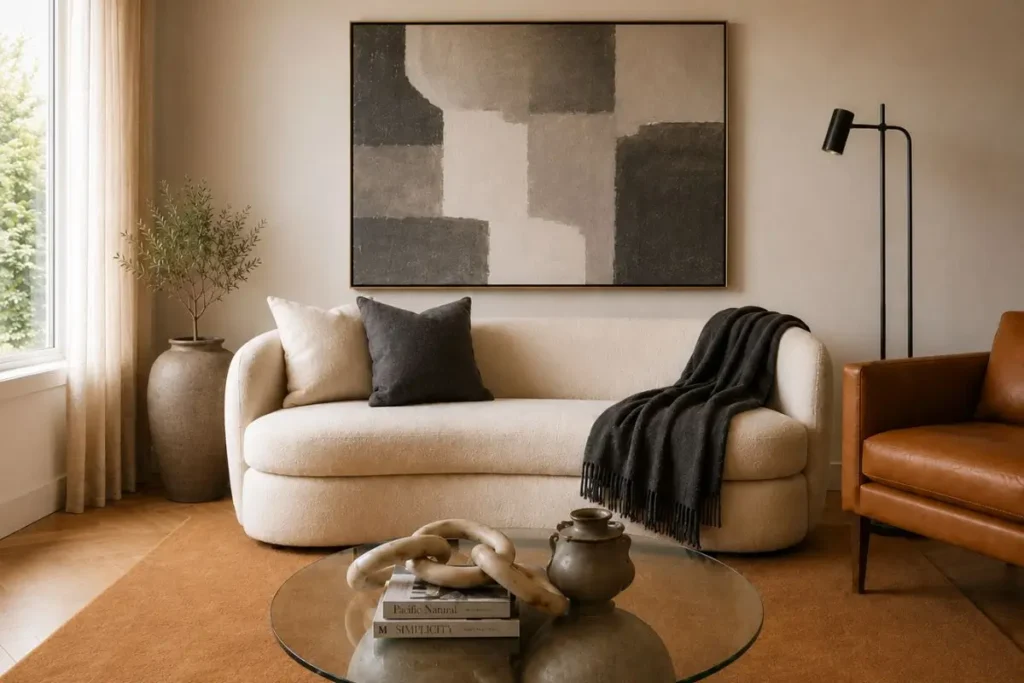
One of the easiest ways to create visual rhythm is by repeating accent colors.
For example, a warm olive tone might appear in a decorative pillow, a ceramic vase, and a piece of artwork. The repetition helps connect different areas of the room while creating a cohesive design.
Many designer-inspired small living room ideas use this technique because it makes a space feel thoughtfully curated.
Recommended Product
The right decorative pillows can instantly add warmth, texture, and sophistication to a small living room. Neutral tones and soft fabrics help create the cozy luxury look featured throughout this article.
View This Decorative Pillow Set
Echo Shapes and Materials
Repetition can also be achieved through form and texture.
Curved shapes may appear in a coffee table, a mirror, and a decorative object. Natural wood finishes might be repeated through furniture, frames, and accessories.
These subtle connections create a sense of harmony that makes the room feel polished, elegant, and effortlessly refined.
Mix Different Shapes for a Softer Look
Many small living room ideas focus heavily on furniture and color palettes, but shape plays an equally important role in how a room feels.
When every piece of furniture has sharp lines and similar proportions, a living room can appear rigid and predictable. Designers often introduce a mix of shapes to create a more inviting and visually interesting space.
The combination of curved and straight elements creates a more layered and visually interesting living room.
Balance Straight Lines With Curved Elements
Most living rooms naturally contain many rectangular forms, including sofas, windows, shelving, and media units.
Introducing curved pieces such as round coffee tables, sculptural chairs, arched mirrors, or soft-edged lighting fixtures helps create balance and visual movement.
This combination often makes a small living room feel more dynamic and sophisticated.
Use Organic Forms in Decorative Accessories
Smaller decorative pieces can also contribute to a softer atmosphere.
Ceramic vessels, sculptural bowls, and organic-shaped objects introduce subtle curves that break up repetitive lines throughout the room.
Many designer-approved small living room ideas use organic forms to create interiors that feel relaxed, refined, and effortlessly elegant.
Give Your Furniture Room to Breathe
One of the most effective small living room ideas is resisting the urge to fill every available space.
Many people believe that adding more furniture and decorative accessories will make a room feel complete. In reality, overcrowding often makes a small living room feel smaller and less inviting.
Professional designers understand that a well-balanced room needs space between key elements. This creates a sense of comfort, improves visual flow, and allows beautiful pieces to stand out.
Leave Space Around Important Pieces
Luxury interiors rarely feel cramped because furniture is arranged with intention.
Instead of squeezing every item into the room, focus on creating comfortable spacing between major pieces. Even a small gap between a sofa, coffee table, or accent chair can make the room feel more open and refined.
Many successful small living room ideas use this simple technique to create a more elegant atmosphere.
Avoid Filling Every Surface
Not every shelf, side table, or console needs decoration.
Leaving some areas intentionally simple helps create balance throughout the room. Decorative objects attract more attention when they are not competing with dozens of surrounding items.
A carefully edited room often feels far more sophisticated than a room filled with accessories.
Use Layered Lighting for a More Luxurious Atmosphere
Lighting is one of the most powerful tools for transforming a small living room. While many homeowners rely on a single ceiling fixture, designer interiors often use multiple light sources to create depth and warmth.
Layering different types of lighting helps a room feel more inviting, sophisticated, and visually balanced. This simple technique can dramatically improve the atmosphere of a room without requiring major renovations.
Combine Ambient, Task, and Accent Lighting
A luxurious living room typically includes a combination of lighting sources rather than a single overhead light.
Floor lamps, table lamps, wall sconces, and decorative lighting can work together to create a softer and more comfortable atmosphere. This layered approach adds dimension and helps highlight important design features throughout the room.
Many designer-inspired small living room ideas use multiple light sources because they create a more refined and welcoming environment.
Use Warm Light for a Cozy Feel
Warm lighting often feels more elegant than bright white light.
Soft lighting enhances textures, furniture, fabrics, and decorative details while creating a calm and inviting atmosphere. A warm glow can make a compact living room feel more comfortable and visually sophisticated.
Many luxurious interiors rely on layered warm lighting to create depth, character, and a sense of effortless elegance.
Choose Statement Art With Confidence
Statement design is not limited to artwork. A bold furniture piece can also become a focal point that gives the room personality and visual impact.
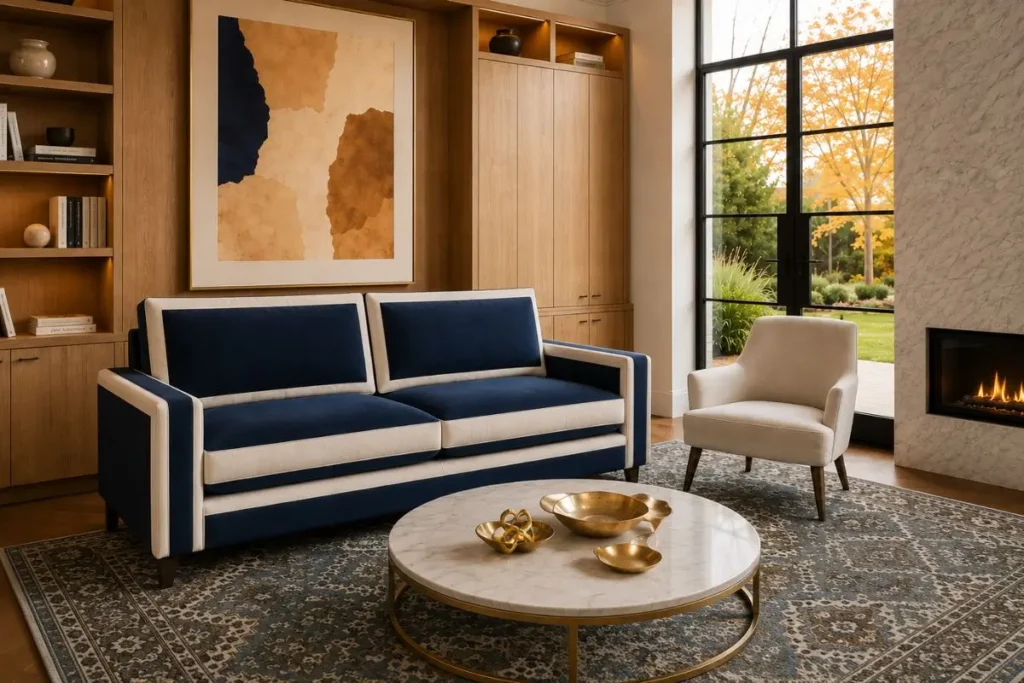
Artwork is one of the most powerful tools for transforming a small living room. The right piece can instantly establish mood, personality, and visual focus.
Many designers use large-scale artwork to create a focal point and add personality to compact spaces. You can find inspiration in the small living room projects featured by Architectural Digest.
Many people choose artwork that is too small because they worry about overwhelming the room. In reality, larger pieces often make a space feel more sophisticated and intentionally designed.
One of the most effective small living room ideas is treating artwork as a major design element rather than a last-minute accessory.
Go Bigger Than You Think
A large piece of artwork often creates a stronger impression than several smaller frames.
This approach works particularly well when combined with ideas found in our guide on How to Make Your Home Look More Expensive.
Oversized art helps anchor the room, define a focal point, and create a sense of confidence within the design. This approach is frequently used in professionally designed interiors because it simplifies the overall composition while making the room feel more refined.
Let Art Become the Room’s Centerpiece
Instead of competing with multiple decorative elements, statement artwork should have room to stand out.
When thoughtfully selected, a single piece can influence the entire atmosphere of a living room and become one of the most memorable features in the space.
Edit the Room Like a Magazine Stylist
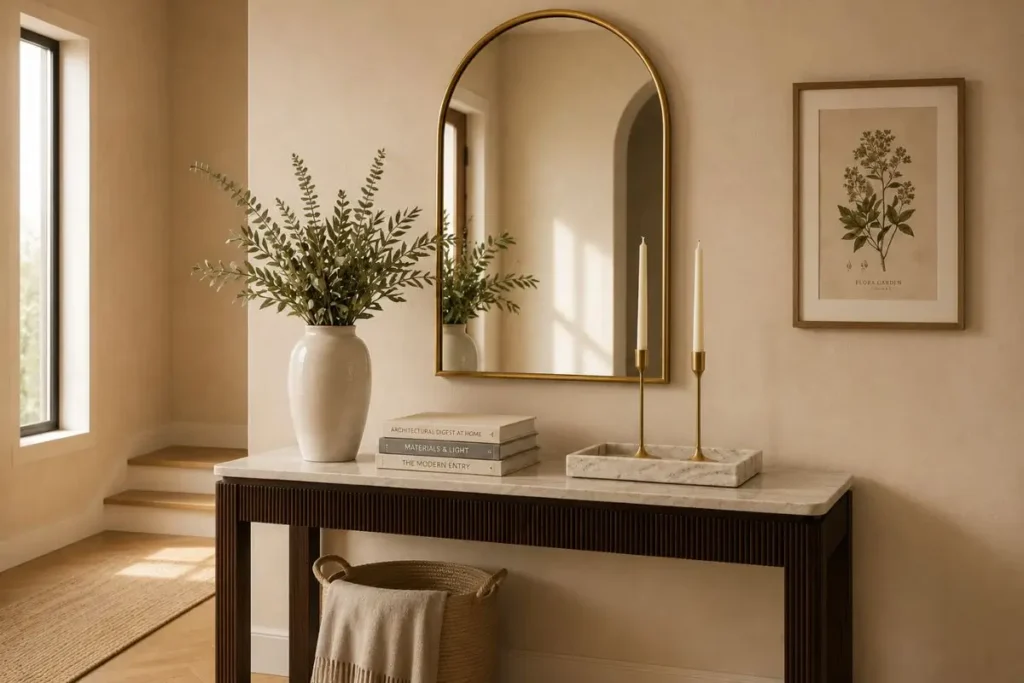
One of the final steps designers take before photographing a room is editing.
Rather than adding more accessories, they often remove unnecessary items until the room feels balanced and visually calm.
This process helps highlight the most beautiful elements while creating a cleaner and more sophisticated appearance.
Remove One Thing From Every Surface
A simple styling trick is to remove at least one item from every shelf, table, or console.
This instantly reduces visual clutter and helps important decorative pieces receive more attention.
Many successful small living room ideas rely on restraint rather than excess.
Focus on Quality Over Quantity
A few beautiful objects often create a stronger impression than dozens of decorative accessories.
Choosing pieces with interesting materials, sculptural forms, or personal meaning helps create a living room that feels authentic, elegant, and thoughtfully curated.
Frequently Asked Questions
How can I make a small living room feel more luxurious?
Focus on layout, proportion, and styling rather than adding more furniture. Large artwork, statement pieces, thoughtful surface styling, and balanced furniture placement can instantly make a small living room feel more elegant and sophisticated.
Should furniture be small in a small living room?
Not always. Many designers prefer using fewer, larger pieces instead of filling a room with several small items. This approach often creates a cleaner look and helps the space feel more intentional and luxurious.
What is the biggest mistake in a small living room?
Overcrowding is one of the most common mistakes. Too much furniture, excessive accessories, and poorly planned layouts can make a room feel smaller and less comfortable. Leaving space around key pieces creates a more refined atmosphere.
What colors work best in small living rooms?
Warm neutrals, soft earth tones, and cohesive color palettes work beautifully in small living rooms. However, a well-balanced layout and thoughtful styling usually have a greater impact than color alone.
Can dark colors work in a small living room?
Yes. Dark colors can add depth, contrast, and sophistication when used intentionally. A navy sofa, dark wood accents, or charcoal details can create a luxurious look while maintaining balance within the space.