There is a moment at the end of the day when you stop wanting more.
You do not want another purchase, another renovation, or another beautiful room saved on Pinterest. You simply want somewhere quiet enough to breathe. You close the bathroom door, the rest of the house becomes distant, and warm light touches the walls. For a few minutes, nobody needs anything from you.
The bathroom has not changed, but the way you experience it has.
Perhaps this is one of the most overlooked possibilities in modern interior design: a room does not have to be new, expensive, or perfect to make us feel better. Sometimes, what changes our relationship with a space is the meaning we give to it.
This is where Greek philosophy bathroom design becomes more than just an aesthetic idea; it becomes a tool for daily restoration. Ancient Greek thinkers explored Eudaimonia—the concept of human flourishing and living well. Today, their foundational ideas about balance, moderation, and harmony can directly shape the private spaces we create.
By shifting our perspective, a bathroom is no longer only a place where we prepare our bodies. Through the lens of Greek philosophy bathroom design, it transforms into a quiet transition between one part of the day and another—a sacred place to pause, gather yourself, and return to the world refreshed.
What Ancient Thinkers Can Teach Us About a Beautiful Home
The ancient Greeks connected beauty (kalon) directly with the experience of virtuous living. Philosophers explored how goodness, proportion, and harmony could contribute to a meaningful life. They questioned what deserves our attention, what is truly valuable, and how balance shapes everyday life.
These questions can enter the home too. A bathroom may be small, but it can reflect the way we choose to live. When we look past pure functionality, we begin to notice proportion, light, quietness, and the relationship between the elements around us.
Beauty That Serves Life
For the Greeks, beauty was inherently tied to order and symmetry. This offers a useful perspective for a Greek philosophy bathroom design: a beautiful space does not need to be elaborate. Instead, it needs to feel coherent with the person who uses it.
Instead of asking only: “How can I make this bathroom look beautiful?”
Ask: “How can this space help me live this part of my day better?”
That small shift turns decoration into a more meaningful design choice.
The Art of Balance in Greek Philosophy Bathroom Design
Balance is at the heart of Greek aesthetics. In a true Greek philosophy bathroom design, balance is understood as the harmonious relationship between what we see, what we use, and how the space makes us feel.
This does not require perfect, rigid symmetry or an expensive renovation. Grounded in the famous Delphi aphorism Meden Agan (nothing in excess), balance can appear in simple proportions:
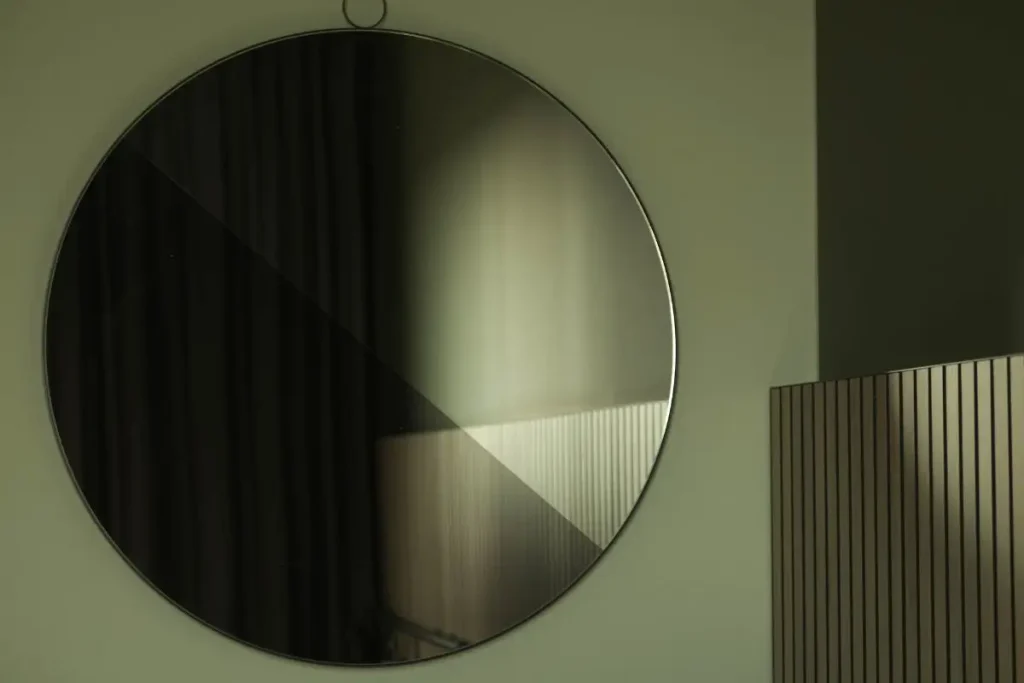
- The breathing room between an empty wall and a mirror.
- The soft contrast between light and shadow.
- The deliberate placement of a few carefully chosen elements.
Create Harmony Through Proportion
A bathroom feels more harmonious when no single feature competes with everything around it. A large mirror needs visual space to breathe. A patterned tile benefits from quieter surroundings. A sculptural sink becomes more expressive when the rest of the room remains restrained.
The principle is simple: let each element have enough space to be appreciated. Once proportion begins to guide the layout, simplicity becomes the next natural step.
Bringing Greek Philosophy Into Everyday Bathroom Design
Philosophy becomes more meaningful when it can be felt in ordinary life. In a bathroom, ideas of moderation, harmony, and the appreciation of simple pleasures can become small sensory experiences.
Let a Natural Soap Become Part of the Ritual
Instead of displaying several brightly packaged products, choose one beautiful bar of handmade soap made with simple, natural ingredients. Place it on a small ceramic soap dish so that an everyday object also becomes part of the design.

Imagine using a handmade soap with a pleasant texture as warm water runs over your hands. A subtle scent of lavender, rosemary, or fresh citrus gently fills the room, bringing freshness, cleanliness, and calm to a simple daily moment. The idea is not to own more; it is to choose one useful thing thoughtfully.
Use Scent to Create an Emotional Atmosphere
Scent can profoundly influence how we experience a room. To align with the principles of Greek philosophy bathroom design, moderation matters here. The purpose is not to make the bathroom smell strong, but to create a gentle sensory cue that says: “This is a moment to slow down.”
- Morning Freshness: Subtle citrus aromas such as lemon or bergamot.
- Evening Calm: Lavender, cedar, or chamomile to create a softer atmosphere.
Bring the Mediterranean to the Sink
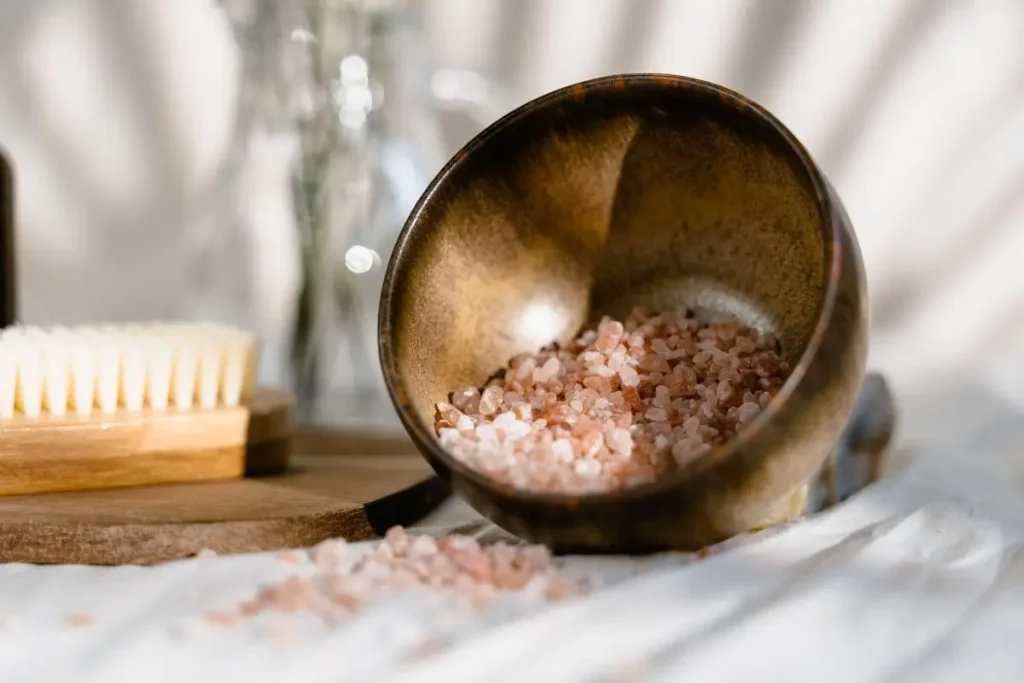
A small ceramic bowl filled with sea salt, a piece of natural pumice stone, or a bundle of dried rosemary can create a subtle Mediterranean connection. These simple elements add texture, fragrance, and a sense of nature without turning the bathroom into a themed space.
Choose Objects That Tell a Quiet Story
Instead of several decorative pieces, choose one object with meaning: a handmade ceramic cup, a small stone collected from a memorable place, a linen hand towel, or a vessel crafted by a local artisan. Its value comes from craftsmanship, natural material, and personal memory.
Make Water Part of the Experience
Water is already the central element of a bathroom, yet we rarely pause to notice its sensory presence. Ground your Greek philosophy bathroom design by letting the sound of running water soften the atmosphere.
A warm shower can become a moment of reflection inspired by Stoic philosophy, an opportunity to release the tensions of the day and focus on what is within your control. Cool water in the morning may bring a refreshing sense of renewal. Soft towels, a warm robe, and a comfortable bath mat can add to this sense of care without filling the room with unnecessary objects.
A Beautiful Space Can Change the Way We Live
Perhaps the most valuable lesson of Greek philosophy is that beauty does not exist separately from the way we live. You do not need to recreate ancient Greece or transform the entire room overnight. Start with what you already have and consider how proportion, light, scent, water, and a few meaningful objects can change the experience.
Ultimately, a Greek philosophy bathroom design is not simply about a room that looks good. It is about creating a space that welcomes you at the beginning of the day and helps you slow down at the end of it. Sometimes, living well (Eudaimonia) begins with something remarkably simple: creating a place where, for a few quiet minutes, you can breathe.
If you believe that our spaces should reflect our search for internal peace, feel free to subscribe to Florescer Criativo. Together, we explore how wisdom shapes a calmer, more intentional life.
Frequently Asked Questions (FAQ)
What is Greek philosophy bathroom design?
It is an interior design approach inspired by ancient Greek principles like Eudaimonia (human flourishing) and Meden Agan (nothing in excess). Instead of focusing on expensive luxury, it prioritizes balance, natural textures, raw elements, and light to turn a functional bathroom into a personal sanctuary for psychological restoration.
How can I create a Greek philosophy bathroom without a full renovation?
You do not need to change your tiles or plumbing to practice this philosophy. You can bring balance to your space by clearing visual clutter, using a single handmade soap on an organic ceramic dish, introducing subtle natural scents like lavender or citrus, and choosing one or two meaningful handcrafted objects that bring you comfort.
What color palette best fits a Greek-inspired aesthetic?
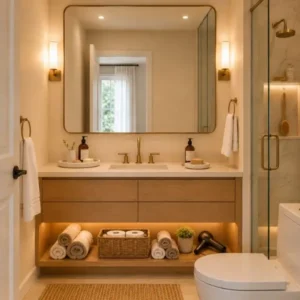
A Greek-inspired aesthetic often embraces natural materials and Mediterranean tones, such as warm cream, beige, stone grey, and earthy colors. However, creating harmony does not require changing your existing tiles or fixtures. Even a bathroom with bold or unusual colors can feel balanced through thoughtful lighting, simple accessories, and a few carefully chosen details.
Why does the ancient concept of balance matter in a modern home?
In our fast-paced digital world, our minds are constantly overstimulated by screens and clutter. By applying the ancient Greek art of proportion and balance to your bathroom, you create visual and mental breathing room. This intentional structure can make the space feel calmer and more welcoming.