If you’ve been searching for how to make a small home office feel bigger, you’re probably hoping for a simple solution. The good news is that it has very little to do with adding square footage. More often, it comes down to thoughtful design decisions that change how the room feels and functions.
Designers rarely begin by replacing furniture or planning expensive renovations. Instead, they look at how the room flows, how natural light moves through the space, and how every object contributes to the overall atmosphere. Small adjustments, made with intention, can completely transform the feeling of a compact home office.
In this guide, you’ll discover nine designer tricks to make a small home office feel bigger while creating a workspace that feels brighter, more open, and more enjoyable to use every day. Whether your office occupies a dedicated room or a quiet corner of your home, these ideas will help you make the most of every square foot.
Make Every Step Feel Effortless
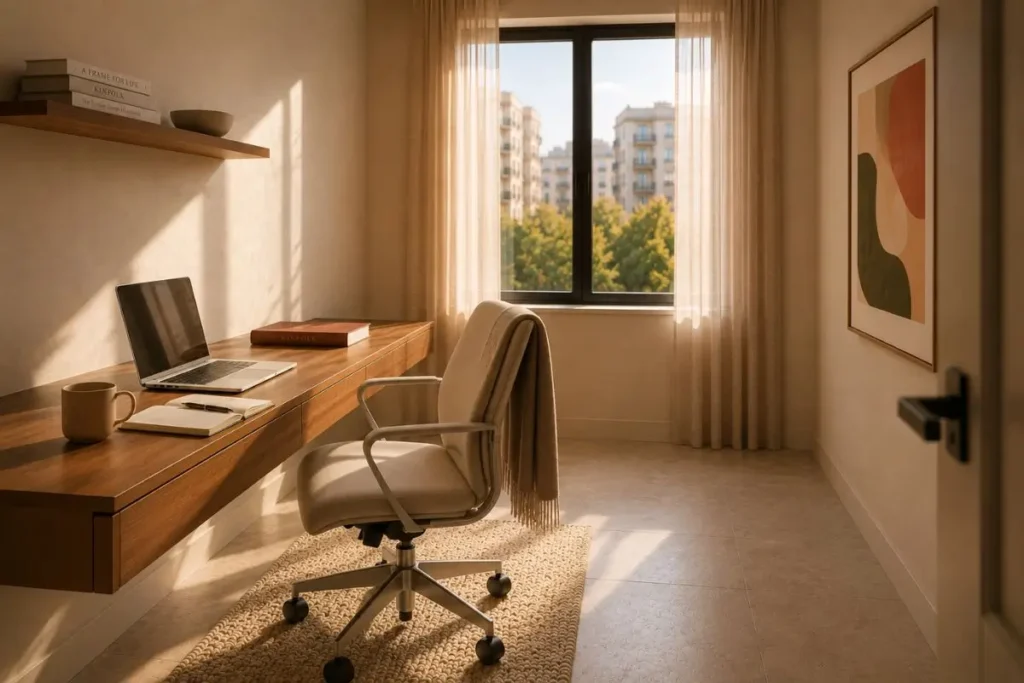
A small home office feels larger when you can move through it without thinking about the space itself. Instead of weaving around furniture or squeezing between objects, every step should feel natural and uninterrupted. This simple approach makes everyday tasks feel easier while helping a small home office feel bigger through better circulation and a more open layout. Designers often focus on circulation before anything else because a room with clear pathways immediately feels calmer, brighter, and more spacious.
Before bringing anything new into the room, take a fresh look at what’s already there. Removing unnecessary obstacles, improving circulation, and leaving comfortable walking space around your desk often creates a greater sense of openness than buying additional furniture. In many cases, the most spacious-looking home offices simply allow the room to breathe, making the entire workspace feel lighter, more functional, and visually larger.
Let the Room Breathe
Not every corner needs to be filled. Leaving some open floor space allows each piece of furniture to be appreciated while creating a lighter, more balanced composition. This simple change can make a small home office feel bigger without removing the room’s personality.
Position Your Desk Thoughtfully
The position of your desk shapes more than productivity—it influences how the entire room is perceived. Place it where it benefits from natural light and maintains a clear connection with the rest of the space. Even small adjustments can make a small home office feel bigger, creating a workspace that feels brighter, more balanced, and naturally welcoming.
An ergonomic workstation can also improve comfort and support healthier daily work habits, making your workspace feel better in every sense.
Lighten What Feels Heavy
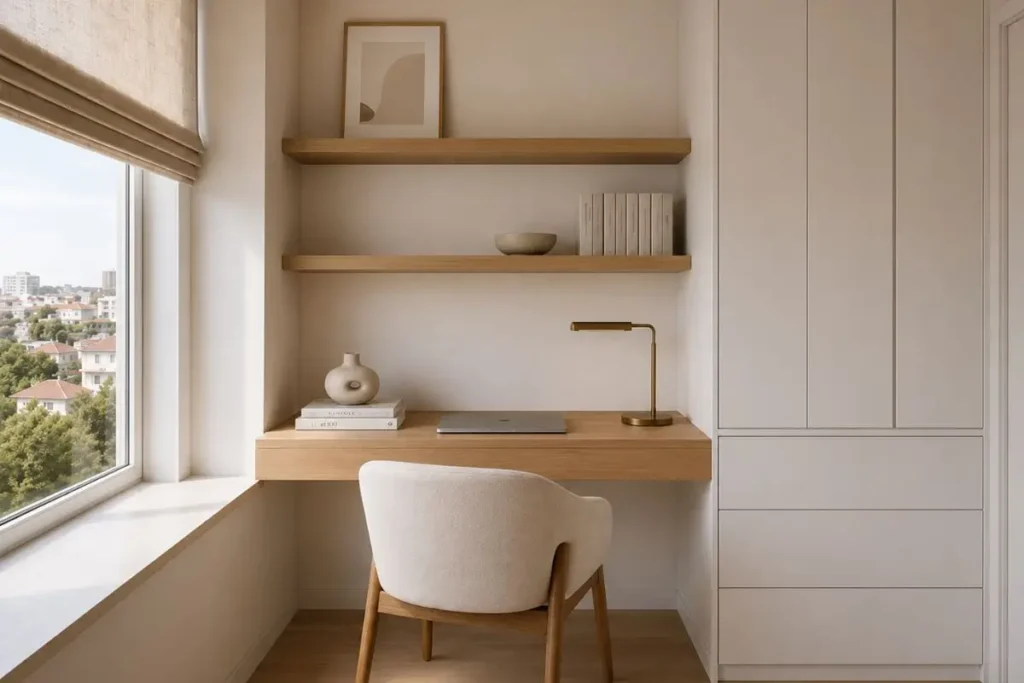
A small room isn’t defined only by its dimensions. More often, it’s the visual weight of furniture, materials, and decorative pieces that makes it seem more confined. When exploring how to make a small home office feel bigger, designers pay close attention to visual balance rather than square footage.
Instead of adding more furniture, focus on choosing pieces that work together. When finishes, shapes, and materials complement one another, the room feels lighter, calmer, and naturally more inviting.
Think Beyond Furniture Size
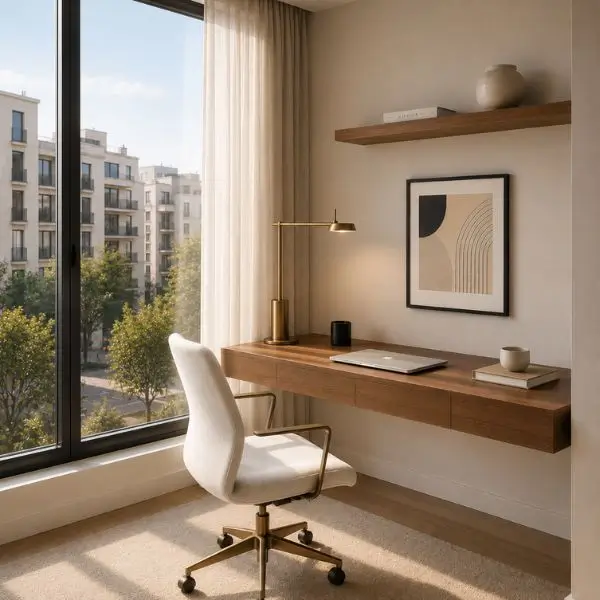
If you’re wondering how to make a small home office feel bigger, choosing smaller furniture isn’t always the answer. Scale, proportion, and visual presence matter far more than measurements alone. Desks, chairs, and shelving with slim profiles, open bases, or raised legs reveal more of the floor, creating a stronger sense of depth without sacrificing comfort.
Hide Storage Without Hiding Style
Storage should support your workspace instead of becoming its main feature. Closed cabinets, drawers, decorative boxes, and multifunctional furniture keep everyday essentials organized while reducing visual clutter.
Rather than displaying everything, choose a few meaningful objects that reflect your personality. A favorite book, a sculptural lamp, handcrafted pottery, or a framed artwork adds warmth without making the room feel crowded.
Embrace Vertical Space
When exploring how to make a small home office feel bigger, don’t forget to look up. Floating shelves, vertical artwork, and tall bookcases naturally draw the eye upward, making ceilings appear higher and the room feel more spacious. Used thoughtfully, vertical storage adds function and personality without taking up valuable floor space.
Guide the Eye Across the Room
One of the most effective design principles has little to do with making a room larger—it guides the way the eye moves. When your gaze flows naturally from one area to another, the space feels calmer, more balanced, and visually more generous. If you’re exploring how to make a small home office feel bigger, creating this visual flow is one of the simplest techniques to achieve it.
Instead of relying on one standout feature, think about how light, color, texture, and materials work together. This visual continuity encourages the eye to travel through the room, making even a compact home office feel more spacious.
Let Natural Light Take the Lead
Natural light is one of the most effective ways to make a small home office feel bigger. It softens shadows, reveals texture, and adds depth throughout the day. Whenever possible, let natural daylight fill the room and avoid heavy curtains that block the view. Sheer curtains or light-filtering fabrics allow daylight to enter while maintaining privacy.
If your office receives limited natural light, combine ambient, task, and accent lighting to create the same sense of warmth and dimension without adding visual weight.
Create Flow With Color and Texture
A room feels larger when colors and materials work together instead of competing for attention. Whether you prefer warm earth tones, rich blues, soft greens, terracotta, or timeless neutrals, a cohesive palette creates harmony and visual continuity.
Repeating materials such as wood, linen, stone, metal, or woven fibers reinforces that connection, helping make a small home office feel bigger while reflecting your personal style.
Create One Strong Focal Point
Every memorable room has one feature that naturally draws attention. It could be a piece of artwork, a beautifully styled bookshelf, a sculptural light fixture, or a window with an attractive view. A single focal point gives the eye a place to rest, making the room feel calmer and more intentional.
Instead of adding more decorative pieces, let one element become the visual anchor. This simple designer trick creates balance, highlights your favorite feature, and allows a compact home office to feel more spacious without losing its personality.
Looking for more inspiration? Explore our 7 Quiet Luxury Home Office Ideas for Small Spaces to discover elegant design ideas for compact workspaces.
If you’ve been wondering how to make a small home office feel bigger, remember that creating a more spacious workspace isn’t about adding square footage. It’s about making thoughtful design choices that improve the way the room looks, feels, and functions every day.
You don’t need a larger room to create a workspace that feels brighter, more functional, and genuinely enjoyable every day.
Once your workspace is ready, explore our Simple Productivity Habits for Remote and Hybrid Workers to build routines that help you stay focused every day.
Frequently Asked Questions
How can I make a small home office feel bigger without renovating?
If you’re wondering how to make a small home office feel bigger, start with simple design changes. Improve the furniture layout, reduce visual clutter, maximize natural light, and choose pieces with balanced proportions before considering a renovation.
What colors make a small home office look bigger?
There isn’t a single best color. A cohesive palette, whether neutral or colorful, creates visual harmony and makes the room feel more open. The key is choosing colors that complement one another instead of creating strong visual contrasts.
Does furniture size matter in a small home office?
Yes, but proportion matters more than size alone. Furniture with slim profiles, raised legs, and open bases creates a lighter look while keeping the workspace comfortable and functional.
What’s the easiest way to make a small home office feel bigger?
Keeping clear pathways, reducing unnecessary clutter, and allowing furniture enough breathing room are often the fastest ways to make a small home office feel bigger without changing the room itself.